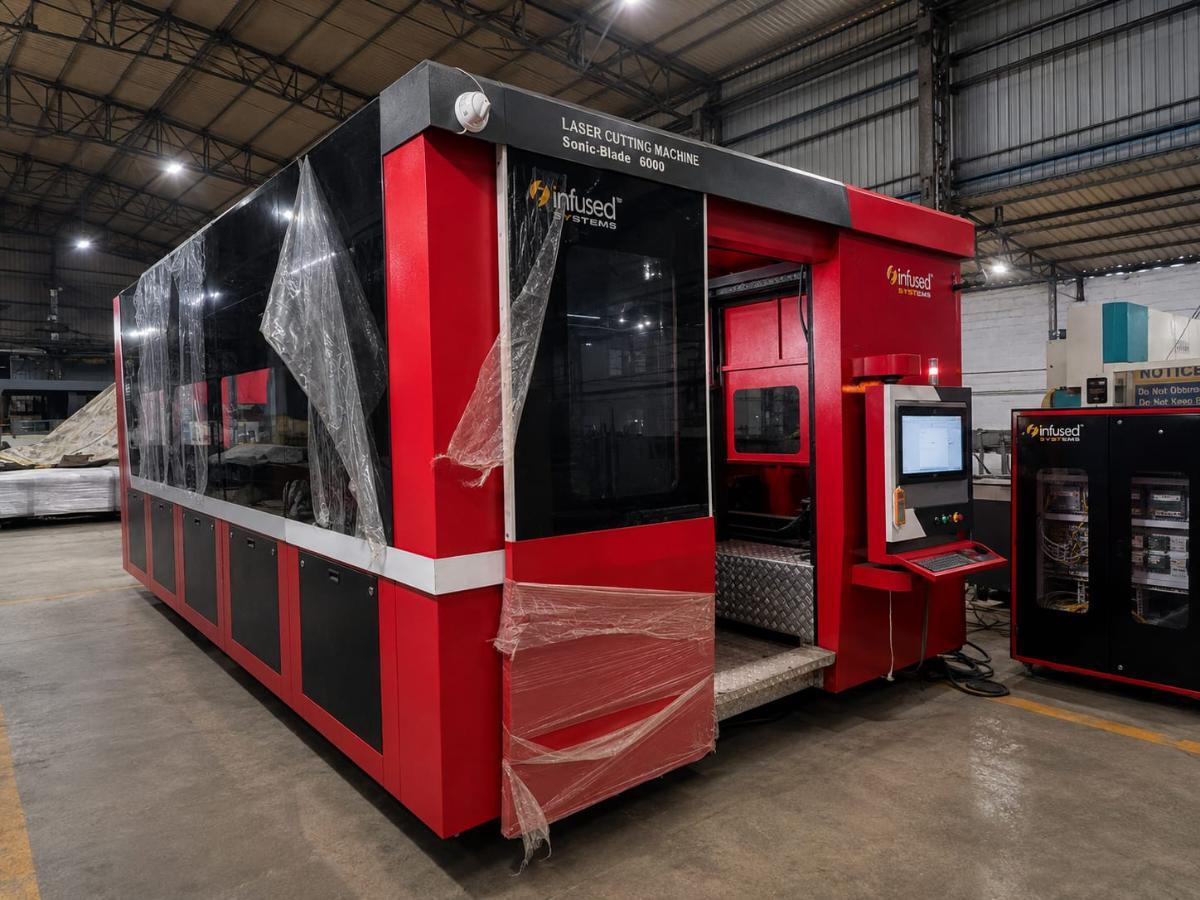
Fiber Laser Cutting Machine for Automotive Component Processing
Introduction
Automotive component manufacturing requires cutting processes that can produce parts according to specific dimensions, design requirements and production tolerances. Components used in vehicle structures, brackets, mounting assemblies and sheet metal parts often require accurate cutting and consistent processing.
A Fiber Laser Cutting Machine is used in metal fabrication applications where programmed cutting paths, controlled material processing and repeatable results are required. In automotive-related manufacturing, it can support the production of different sheet metal components, depending on the material type, thickness and machine configuration.
For manufacturers and fabrication businesses involved in automotive component processing, selecting suitable cutting equipment requires careful consideration of production volume, component geometry, material specifications and operational requirements.
Applications in Automotive Component Manufacturing
Automotive manufacturing involves different metal components that require cutting before further operations such as bending, welding, drilling, forming or assembly.
A fiber laser cutting system may be used for processing suitable sheet metal parts, including:
1. Automotive Brackets and Mounting Parts
Metal brackets and mounting components are used in different vehicle assemblies. Their manufacturing may involve cutting specific profiles, slots and holes according to engineering drawings.
2. Sheet Metal Panels
Automotive sheet metal fabrication includes various panels and shaped components. CNC-controlled cutting can help produce parts according to programmed designs.
3. Structural Metal Components
Certain automotive structural parts require specific profiles and dimensions. The suitability of laser cutting depends on the component design, material grade and thickness.
4. Support Plates and Reinforcement Parts
Support plates, reinforcement components and mounting plates may require accurate cutting before additional fabrication processes.
5. Custom Automotive Components
Manufacturers producing customised or low-volume automotive parts can use programmed cutting operations for different component designs without requiring a separate cutting die for every profile.
These applications should always be evaluated according to the required component specifications and the capabilities of the selected machine.
How Does Fiber Laser Cutting Work?
A fiber laser cutting machine uses a focused laser beam to process metal material along a programmed cutting path.
The process generally involves the following steps:
Design Preparation: The component drawing is prepared using suitable CAD software.
File Processing: The design is converted into a compatible cutting file and processed through the CNC control system.
Material Placement: The metal sheet is positioned on the machine's working table.
Parameter Selection: Cutting parameters are selected according to the material type, thickness and machine configuration.
Cutting Operation: The cutting head follows the programmed path to produce the required component profile.
Component Inspection: The finished part is checked against the required dimensions and quality criteria.
This computer-controlled process allows manufacturers to produce different cutting profiles based on their production drawings.
Important Factors When Selecting a Machine for Automotive Components
Choosing industrial cutting equipment for automotive applications requires more than checking the laser power rating. The machine should match the actual production requirements.
Material Compatibility
Automotive component manufacturers may work with mild steel, stainless steel, aluminium and other metals. The selected machine configuration should be verified for the materials used in production.
Material Thickness
Prepare a list of regularly processed thicknesses and identify any occasional requirements for thicker materials. Cutting capability should be confirmed through technical specifications and practical testing.
Working Area
The machine's working table should accommodate the sheet dimensions commonly used in automotive component manufacturing.
Cutting Accuracy
Consider the dimensional requirements of the components, including hole positions, slots, profiles and overall tolerances. Actual achievable accuracy depends on the machine, material and operating conditions.
Production Requirements
Evaluate the expected number of components, cutting complexity and production frequency. This helps determine the appropriate machine capacity.
CNC Control and Software
Check whether the control system and software are suitable for the cutting designs and production workflow used by your manufacturing unit.
Benefits of CNC-Based Laser Cutting in Automotive Processing
Using a CNC-controlled fiber laser cutting system can offer several operational advantages for suitable automotive metal fabrication applications.
Repeatable Cutting Operations: Programmed cutting paths help maintain consistency across repeated production jobs.
Flexible Component Designs: Different profiles can be processed by changing the cutting program.
Non-Contact Processing: The laser beam processes the material without conventional cutting tools directly contacting the workpiece.
Reduced Tooling Dependence: Laser cutting does not require a separate profile-specific cutting die for every design.
Suitable for Complex Profiles: Intricate outlines, holes and slots can be produced when supported by the machine configuration.
Production Planning: CNC programming helps organise cutting operations for different component requirements.
Actual results depend on material quality, cutting parameters, machine configuration and production practices.
Maintenance and Operational Considerations
Regular maintenance is important for maintaining machine performance and reducing avoidable production interruptions.
Automotive component manufacturers should pay attention to:
Cleaning and inspecting the cutting head and protective lens.
Checking nozzle condition and replacement requirements.
Maintaining the chiller according to manufacturer instructions.
Inspecting the machine's motion system and mechanical components.
Checking electrical connections and safety arrangements.
Following the recommended maintenance schedule.
Ensuring operators are trained in machine operation and routine checks.
Proper maintenance procedures should follow the instructions supplied for the specific machine model.
Information Required Before Selecting a Fiber Laser Cutting Machine
Manufacturers planning to introduce laser cutting into their automotive component production process should prepare the following details before requesting a quotation:
Requirement
Details to provide
Application
Type of automotive components
Material
Mild steel, stainless steel, aluminium or other metals
Thickness
Regular and maximum material thickness
Sheet size
Dimensions of commonly used sheets
Production volume
Expected daily or monthly output
Component design
Drawings, profiles and hole requirements
Cutting requirements
Dimensional tolerances and edge quality
Workshop infrastructure
Available space and electrical supply
Machine configuration
Suitable working area and laser source
Service requirements
Installation, training and maintenance support
Sharing this information helps determine whether the proposed equipment is appropriate for the intended manufacturing application.
Conclusion
Automotive component processing requires suitable equipment, properly prepared cutting programs and a clear understanding of material and dimensional requirements.
A fiber laser cutting machine can support various automotive sheet metal fabrication operations, including the production of brackets, mounting plates, support components and customised metal profiles.
Before selecting a machine, manufacturers should evaluate material compatibility, thickness requirements, production volume, working area, CNC capabilities and maintenance arrangements. A machine selected according to actual production needs can help establish a more organised and consistent metal cutting process.
It is ok to contact this poster with commercial interests.
Call seller